
By Daniel J. Molina, CRO, SensAI
The most important design decisions in our technology are the things we refuse to let it say.
The most important design decisions in our technology are the things we refuse to let it say.
Every few years, a new technology arrives at the border promising to see inside people. Most of those promises did not last, and they failed for the same two reasons. They claimed more than the science supports, and they handed machines decisions that belong to people.
We built SensAI to stay off that path. This week we brought our platform to controlled points of entry. It is the right moment to be precise about what it is, what it is not, and the lines we will not cross.
What it is
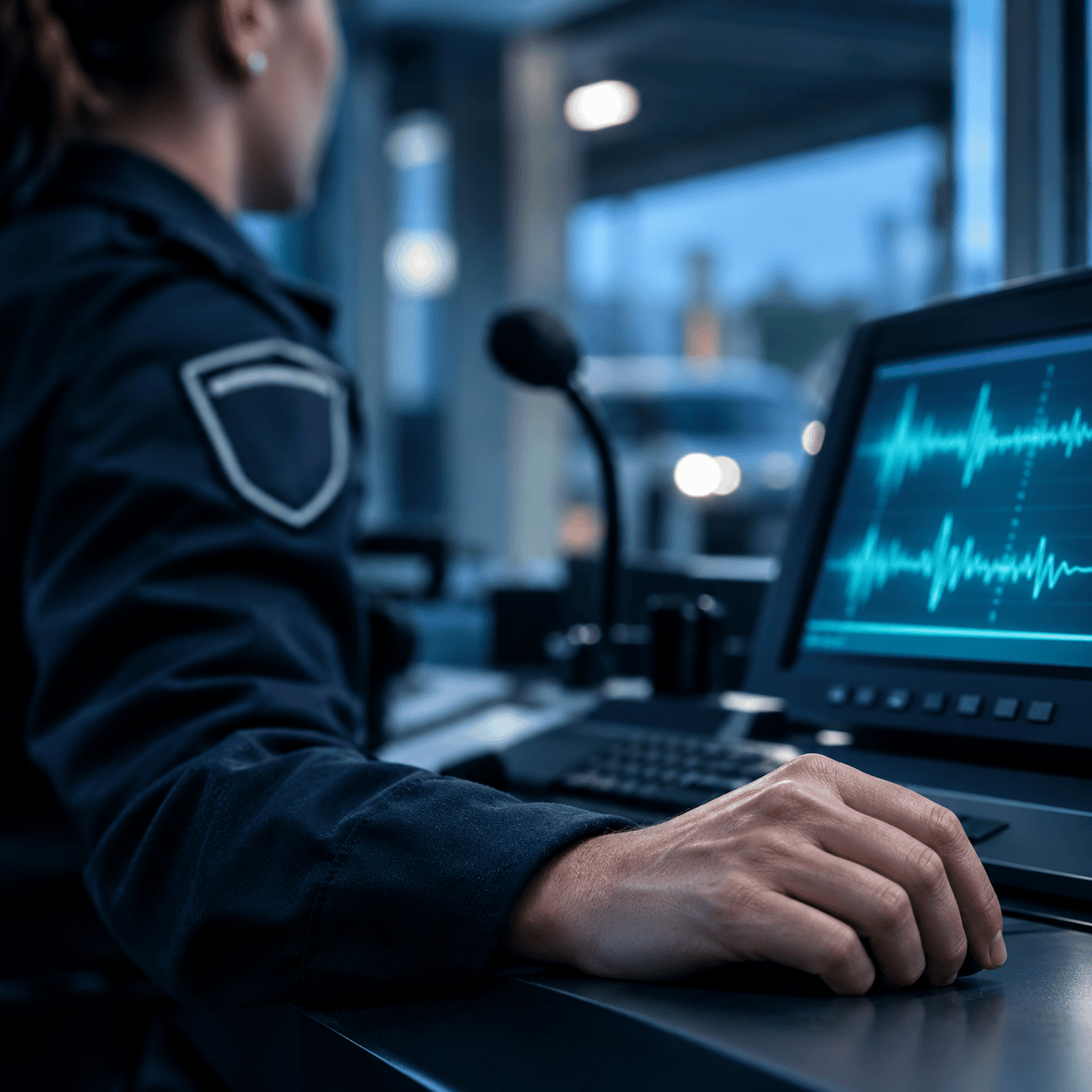
SensAI provides decision support for deception detection and integrity assessment. A standardized interview, one camera, nothing worn. The platform measures physiological signals without contact and compares each person against their own baseline. It surfaces analytical indicators: moments in the conversation that may deserve a closer look. A trained person decides what, if anything, those moments mean.
What it is not, and never will be
There is no physiological signature of a lie. Any company that tells you otherwise is overreaching, and we will not be that company.
What the body does produce is a response, largely outside conscious control, when a question matters to the person answering it. That response can come from concealment. It can also come from fear, fatigue, a difficult history, or the ordinary unease of standing before an officer in a foreign country.
We do not hide that ambiguity. We built around it. That is why our output is an indicator and never a verdict. Our indicators are not proof of deception or wrongdoing, and they do not predict future behavior. They give a trained professional a reason to ask a better question. Nothing more.
The honest comparison
The right benchmark is not a perfect machine. It is what happens at a checkpoint today: an officer reading behavior, under time pressure, on the fortieth interaction of a shift. Research on unaided human judgment of deception puts accuracy at about 54 percent, close to a coin toss (Bond & DePaulo, 2006). And behavior is exactly the channel a motivated person can rehearse.
We do not replace that officer’s judgment. We give it a different channel to work with: involuntary physiology, measured the same way for every person, presented as indicators the officer interprets. The officer still decides, with more than instinct to go on.
Automate the triage. Never the decision.
A fair concern with any decision-support tool is that people will defer to it, and that “human in the loop” quietly becomes a rubber stamp. We take that seriously. The answer is design, not slogans.
- The customer writes the rules in advance and owns them. We do not.
- The officer sees why a case was referred, not only that it was.
- Any routing can be overridden, in either direction.
- Every routing and every override is logged, so supervisors and auditors can see how the system, and the people using it, actually behave.
- A referral is not a refusal. It means a person takes a closer look. Our platform refuses no one.
Oversight that cannot be audited is not oversight. The record is what keeps the human role real.
Consistency is a fairness argument
Today, two people in identical circumstances can be treated very differently depending on the lane, the shift and the officer. Our approach asks every person the same questions, with the same wording and pacing, in their own language. It compares each person with their own physiological baseline, not with how someone is expected to look or sound. That does not remove the duty to test for bias. It gives agencies something consistent enough to test.
Privacy and law are design inputs
People are right to ask where the data goes. Our answer is simple: it stays where the customer keeps it. The platform can run on-premise, and retention follows the customer’s own law. Notice and consent are set by the responsible agency under its legal framework. Every deployment answers to the law where it operates, and we will not describe our regulatory standing in broader terms than the facts allow.
The questions we want asked
Who wrote the rules? Can they be audited? What happens to the person who is referred? Where does the data go? How often do officers override the system, and why?
Those questions belong to every technology that touches people at a border, a prison gate or an airport staff entrance. We would rather answer them before the first deployment than after the first headline.
Our north star
Our name means truth. That is a standard we owe first in our own claims. Integrity means saying exactly what the technology does and no more. It means never presenting an indicator as a verdict, never letting a machine refuse a person, and never describing what we build as a device that reads lies.
The goal was never to see inside people. It is to give the people responsible for trust decisions something better than instinct, and a record that holds everyone accountable, including us.
Truth. Verified.


